Teaching your dog to vocalize on command is a fun, engaging way to strengthen your bond and improve communication skills. If you are wondering how to teach your dog to speak, this guide provides a clear roadmap. We utilize a positive, humane approach that focuses on reward-based learning to build trust and make training an enjoyable activity for both of you.
This article is designed for owners who want to use positive reinforcement to master a new skill. We cover everything from barking on cue to the essential "quiet" command. We will also explore advanced methods like dog talking buttons to help you learn how to train a dog to talk effectively.
Understanding Communication

Before you can teach your dog to "speak" in a human-friendly way, you must learn how to speak dog. This involves interpreting their natural signals and establishing a foundation of mutual respect.
Vocalization Signals
Dogs are constantly communicating, yet it is easy to misinterpret their signals. Rather than labeling behavior as "stubborn," examine the context and your dog's body language. A growl may indicate fear rather than aggression, while freezing often signals a defensive reaction. To better understand these nuances, it is helpful to learn about dog tail meaning to decode their emotional state.
Effective Communication
Learning how to talk to dogs requires awareness of your own output. Your posture, tone, and timing are just as critical as your dog's reactions.
- Body Language: Approach with a calm, relaxed posture. Standing sideways is less threatening than a head-on approach. Avoid hovering, which can be intimidating.
- Tone of Voice: Use a low pitch for confidence and a high pitch for praise. A calm, prolonged "No" discourages activity without inducing stress.
- Timing: Immediate feedback is vital. Mark desired behaviors the instant they happen.
- Consent: Use the "chin rest consent test." If your dog rests their chin in your palm voluntarily, they are ready for interaction.
Rewards and Markers
To train effectively, you need high-value motivators and a clear signal.
- Find Motivators: Test different treats like chicken or cheese. Reserve top-tier rewards for new skills.
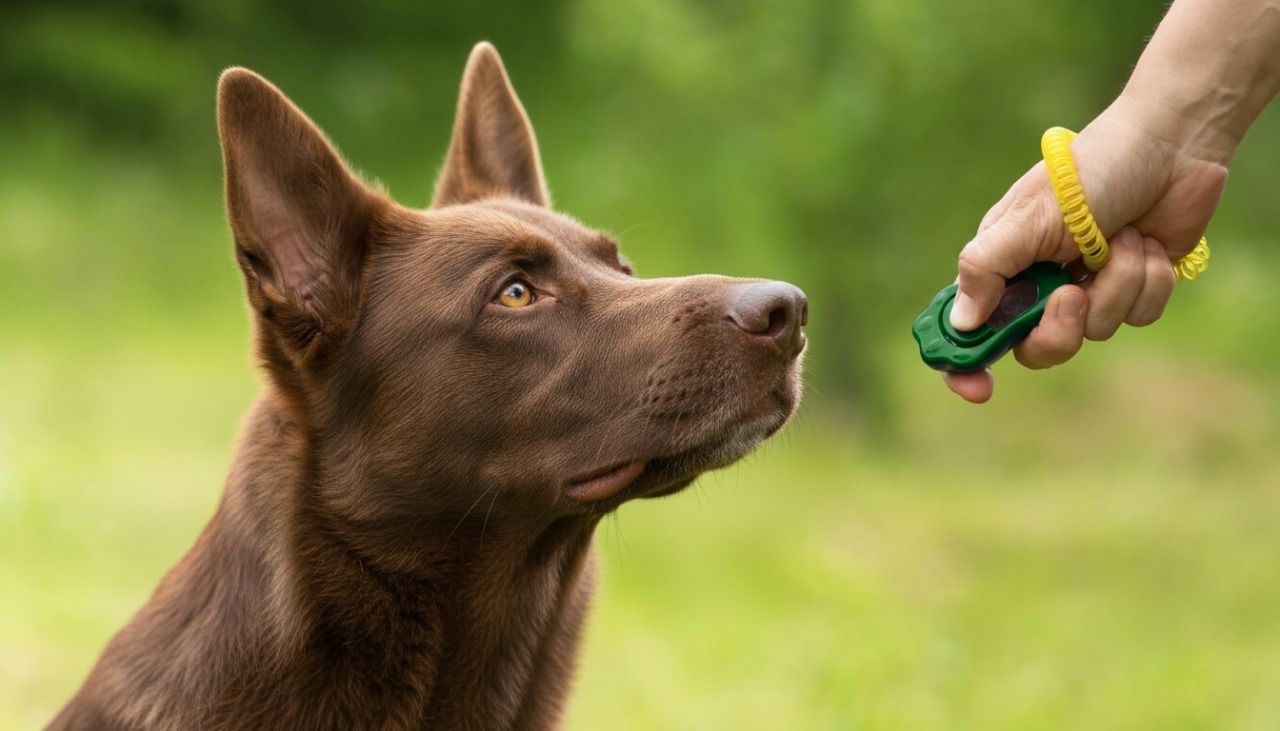
- Charge Your Marker: A marker signals that a reward is coming. This can be a word like "Yes!" or a mechanical clicker. For a deep dive on this tool, read our guide on training clicker dogs. To charge it, click and treat repeatedly until the sound triggers an expectant look.
Training the Speak Command
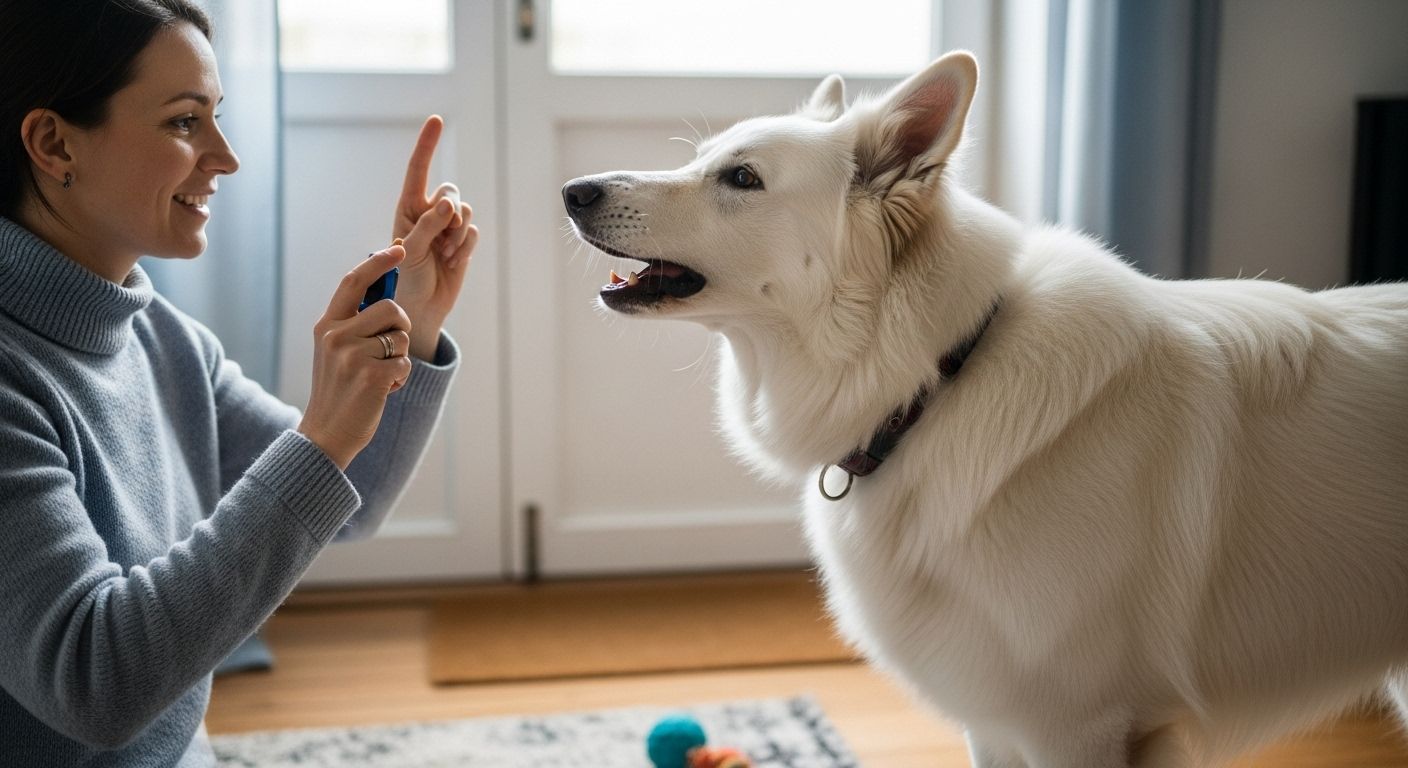
With a marker system in place, you are ready to learn how to teach a dog to speak. The objective is a single bark on a specific verbal cue.
Capturing the Bark
The simplest method is capturing a natural behavior.
- Elicit a Bark: Use a mild trigger, such as a knock on the door.
- Mark and Reward: The moment your dog barks, mark it with your clicker or verbal marker and reward immediately.
- Add Your Cue: Once reliable, say "Speak" right before the trigger. You can also incorporate dog training hand signals to reinforce the command visually.
Training Quiet Dogs
If you are wondering how do you teach a dog to speak when they rarely bark, patience is key. Use a trigger they find mildly exciting, like a toy. Reward even small grumbles or "boofs" initially. Gradually shape these sounds into a full bark before adding the cue.
Managing Excitement
The goal is a controlled vocalization, not a barking frenzy.
Tip: To keep arousal low, reward only a single bark. If they bark multiple times, wait for a pause, then reward the silence.
Keep sessions short. If your dog becomes overexcited, ask for a calm behavior like "place." This ensures they understand that composure earns the reward.
Proofing Behaviors
Once your dog grasps the concept, help them generalize the skill.
- Week 1-2: Capture the bark and associate the cue.
- Week 3: Fade the trigger; ask for a bark with just the cue.
- Week 4: Practice in different rooms.
- Week 5+: Introduce controlled distractions.
This progression demonstrates how to train a dog to speak without causing frustration. Similar patience is required when you teach a dog to heel, as both skills require focus amidst distractions.
The Quiet Command
Teaching "speak" must be paired with "quiet." This ensures your new trick does not become a behavioral issue.
Teaching Silence
Use differential reinforcement to value silence over noise.
- Ask your dog to "speak."
- Present a treat to their nose; they will stop barking to sniff.
- Mark ("Yes!") the instant they are silent and reward.
- Add the cue "Quiet" or "Shh" as they stop.
- Gradually increase the duration of silence required.
Important: Never yell "Quiet!" This mimics barking and increases anxiety.
Building Impulse Control
To prevent demand barking, build self-control.
- Calm-on-Mat: Teach your dog to settle on a bed. This incompatible behavior prevents reactive barking.
- "Look At That" (LAT): Teach them to look at a trigger and then back at you.
Barking Management
Management prevents bad habits from forming.
- Visual Barriers: Block sightlines to the street using blinds.
- Sound Masking: Use white noise machines.
- Enrichment: Provide puzzle toys and scent games.
- Exercise: A tired dog is a quiet dog.
For more details on managing vocalizations, specifically with vocal breeds, check out our guide on German Shepherd barking.
Using Talking Buttons
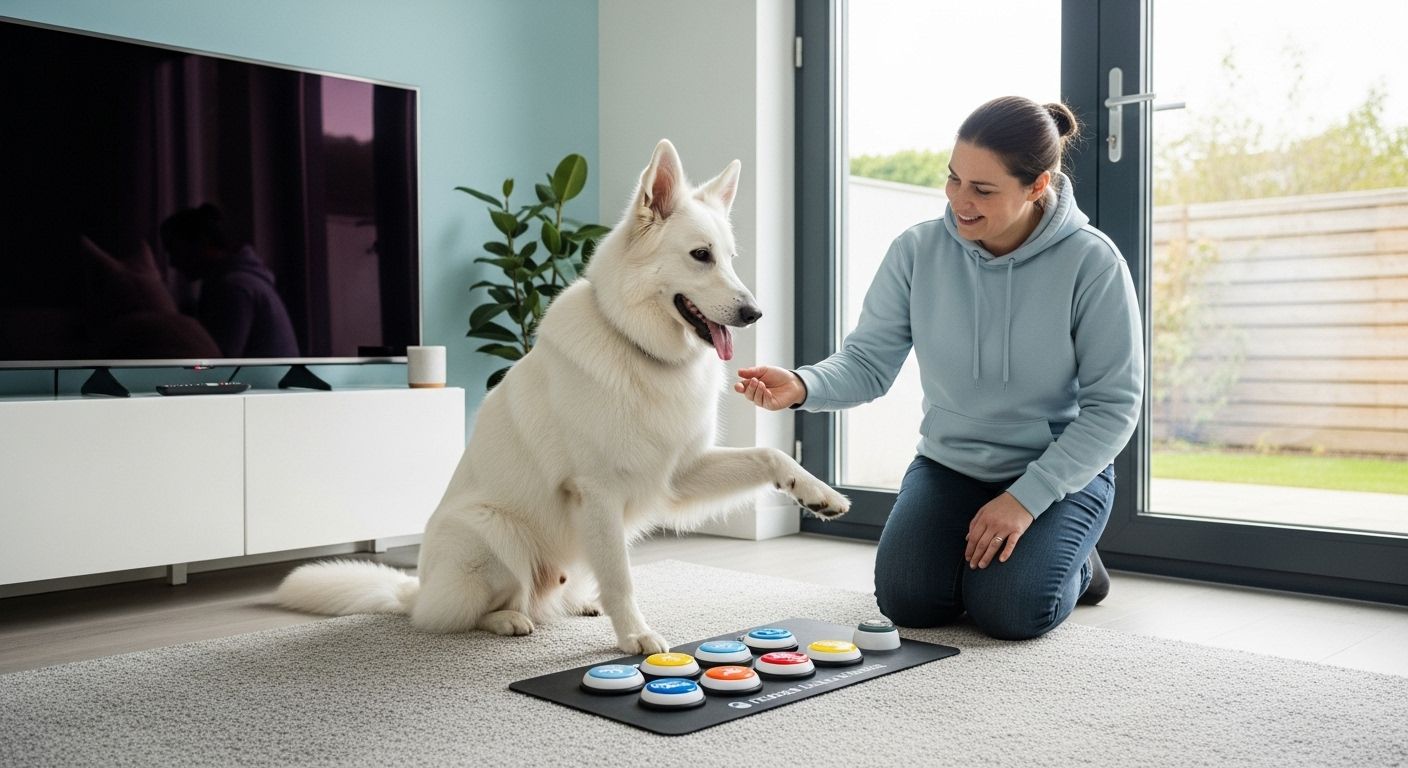
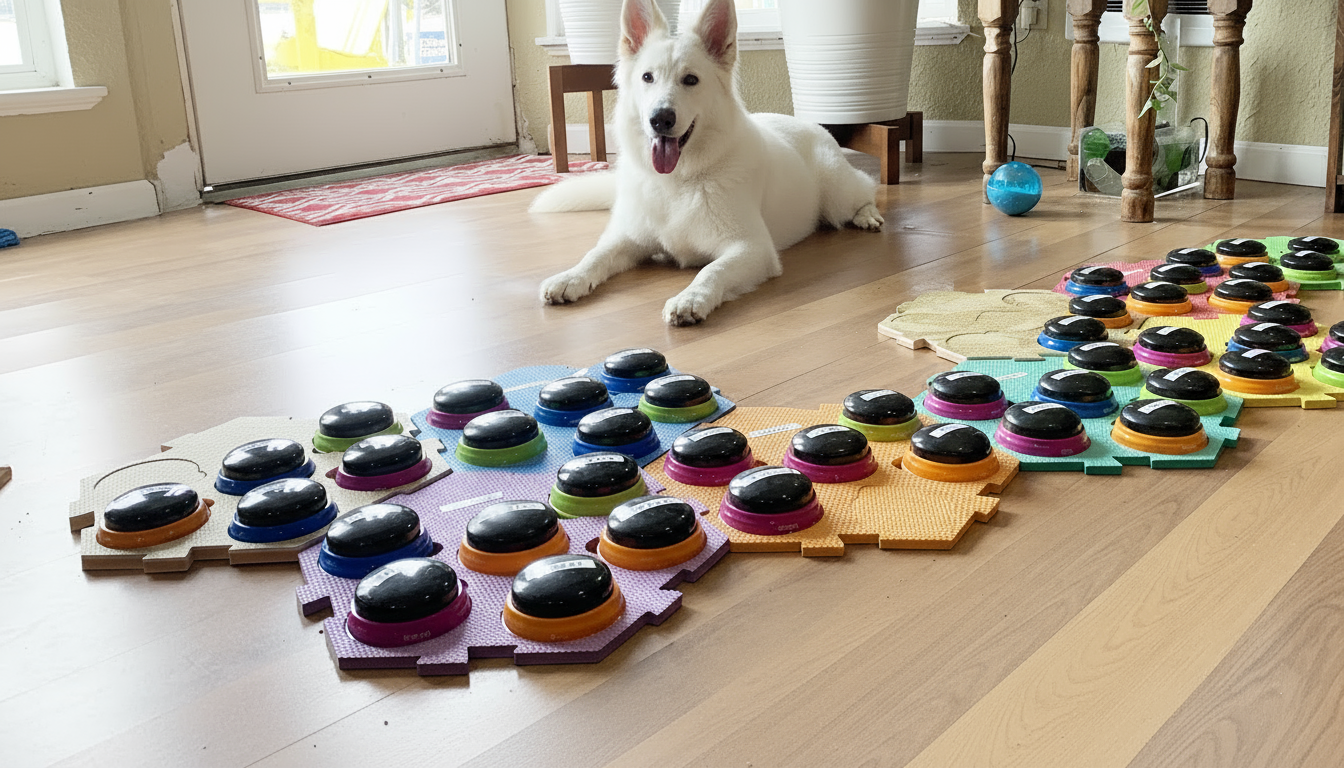
For owners interested in how to teach a dog to talk beyond simple barks, dog communication buttons provide a unique voice. These allow dogs to express specific needs by pressing recorded buttons.
Button Training Basics
You will need recordable buttons and a non-slip mat. You can find recommendations in our review of the best dog training equipment.
- Pick First Words: Start with high-value words like "Outside" or "Play."
- Record Voice: Use a clear, enthusiastic tone.
- Placement: Place the "Outside" button near the door.
- Modeling: Say "Outside," press the button, and immediately open the door.
Avoiding Button Mashing
To encourage purposeful dog training button use, only reward clear presses. If your dog becomes frantic, remove access briefly. Introduce an "All Done" button to signal the end of an activity.
Consistent Setup
Success with dog buttons for communication relies on muscle memory.
- Layout: Keep buttons in fixed locations.
- Consistency: Everyone in the household must use the same method.
- Tracking: Log usage to identify motivating words.
Troubleshooting Tips
If your dog ignores the talking buttons for dogs, review your approach:
- Is the reward valuable?
- Is the button placement logical?
- Are you modeling the behavior consistently?
Recent studies in canine cognition suggest that dogs can learn to associate words with objects and actions much like toddlers do. Patience is essential; if your dog shows stress, revert to a simpler stage. Communication should always be a voluntary, positive choice.